











No products in the cart.
value of all cryptocurrencies Leave a comment
Value of all cryptocurrencies
In January 2024 the SEC approved 11 exchange traded funds to invest in Bitcoin. There were already a number of Bitcoin ETFs available in other countries, but this change allowed them to be available to retail investors in the United States comic play casino. This opens the way for a much wider range of investors to be able to add some exposure to cryptocurrency in their portfolios.
One of the biggest winners is Axie Infinity — a Pokémon-inspired game where players collect Axies (NFTs of digital pets), breed and battle them against other players to earn Smooth Love Potion (SLP) — the in-game reward token. This game was extremely popular in developing countries like The Philippines, due to the level of income they could earn. Players in the Philippines can check the price of SLP to PHP today directly on CoinMarketCap.
The market cap of bitcoin and other major cryptocurrenciesare are listed below from largest market capitalization to smallest. Cryptocurrencies are also known as coins or virtual currency. The value of bitcoin is growing with time and is the largest currency by market cap currently. The currency data below is updated once every five minutes with the latest market cap data. Exchange rates for the currencies are shown in U.S. dollars. New coins are being brought to market via initial coin offerings frequently so expect the list of cryptocurrencies below to grow.
Do all cryptocurrencies use blockchain
Because of this distribution—and the encrypted proof that work was done—the blockchain data, such as transaction history, becomes irreversible. Such a record could be a list of transactions, but private blockchains can also hold a variety of other information like legal contracts, state identifications, or a company’s inventory. Most blockchains wouldn’t “store” these items directly; they would likely be sent through a hashing algorithm and represented on the blockchain by a token.
You might be familiar with spreadsheets or databases. A blockchain is somewhat similar because it is a database where information is entered and stored. The key difference between a traditional database or spreadsheet and a blockchain is how the data is structured and accessed.
A coin is any cryptocurrency that uses its own independent blockchain. For example, Bitcoin is considered a “coin” because it runs on its own infrastructure. Similarly, Ether is operated via the Ethereum blockchain. The term “altcoin” is used to refer to any coin other than Bitcoin.
Some companies experimenting with blockchain include Walmart, Pfizer, AIG, Siemens, and Unilever, among others. For example, IBM has created its Food Trust blockchain to trace the journey that food products take to get to their locations.
A blockchain is a distributed network of files chained together using programs that create hashes, or strings of numbers and letters that represent the information contained in the files. Every network participant is a computer or device that compares these hashes to the one they generate. If there is a match, the file is kept. If there isn’t, the file is rejected.
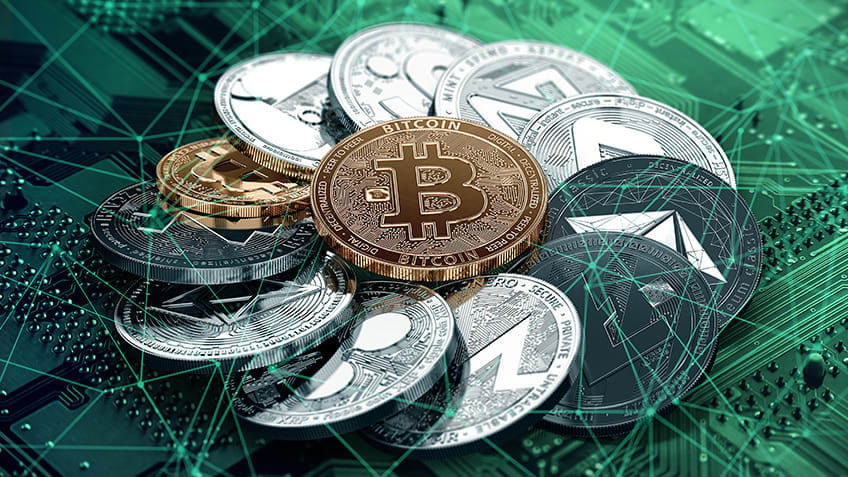
Are all cryptocurrencies the same
Bitcoin may be the godfather of crypto, but it’s far from the whole family. Altcoins (short for “alternative coins”) encompass all other cryptocurrencies. There are thousands out there, each with its own special flavors and purposes.
The world of cryptocurrencies is a whirlwind of innovation. New projects, trends, and even entirely new sectors of blockchain application seem to emerge constantly. Staying informed in this rapidly evolving space is essential for making smart decisions, whether as an investor, developer, or simply a curious observer. Here’s how:
Digital currencies have utility similar to physical currencies. They can be used to purchase goods and pay for services. They can also find restricted use among certain online communities, such as gaming sites, gambling portals, or social media networks.
Digital currencies are assets that are only used for electronic transactions. They do not have any physical form, although they can be exchanged for regular money or other assets. Although the most popular digital currencies are cryptocurrencies like bitcoin, many national governments are considering issuing their own centralized digital currencies.
Ethereum is a blockchain computing platform. It was conceived as a platform for developing applications that would benefit from the utilization of decentralization, distributed consensus, and smart contracts. Literally hundreds of Ethereum-based projects now exist, projects that have nothing to do with cryptocurrency. As for Ether, it is a cryptocurrency based on the Ethereum blockchain.
Most digital currencies are created by issuing them on Ethereum or another blockchain capable of running smart contracts. The issuer must first decide how many tokens to issue, and any special rules that limit transactions or ownership. Once these choices are coded into the smart contract, the issuer pays a small amount of cryptocurrency to pay for the computational cost of issuing the tokens.
